
Formula Regional European Championship: FAQs
What does FREC stand for?
FREC stands for Formula Regional European Championship — officially the FIA Formula Regional European Championship. It picked up full FIA Championship status from 2026, which is basically the governing body of world motorsport putting its full weight behind the series. A pretty big deal!
It was formally known as FRECA when it was run by Alpine, but will be referred to as FREC in 2026.
Where does FREC fit in the racing ladder?
Think of it like this: Karting → Formula 4 → Formula Regional → Formula 3 → Formula 2 → Formula 1.
FREC sits right in the middle of that journey — one step above F4 and one below F3. It's the point where drivers stop being promising kids and start becoming genuine prospects.
How old are the drivers?
Most of them are between 16 and 20. Yeah, some of these guys are younger than you and already racing at Spa. It's wild. The series attracts drivers fresh out of Formula 4, right at the start of what could be very serious careers.
What car do we drive?
From 2026, everyone races the new Tatuus T-326 — the second generation of Formula Regional machinery. It runs a Toyota-derived Autotecnica engine and Pirelli tyres, and crucially, every single driver uses identical equipment. That means no hiding behind a better car. If you win, you earned it.
How does a race weekend work?
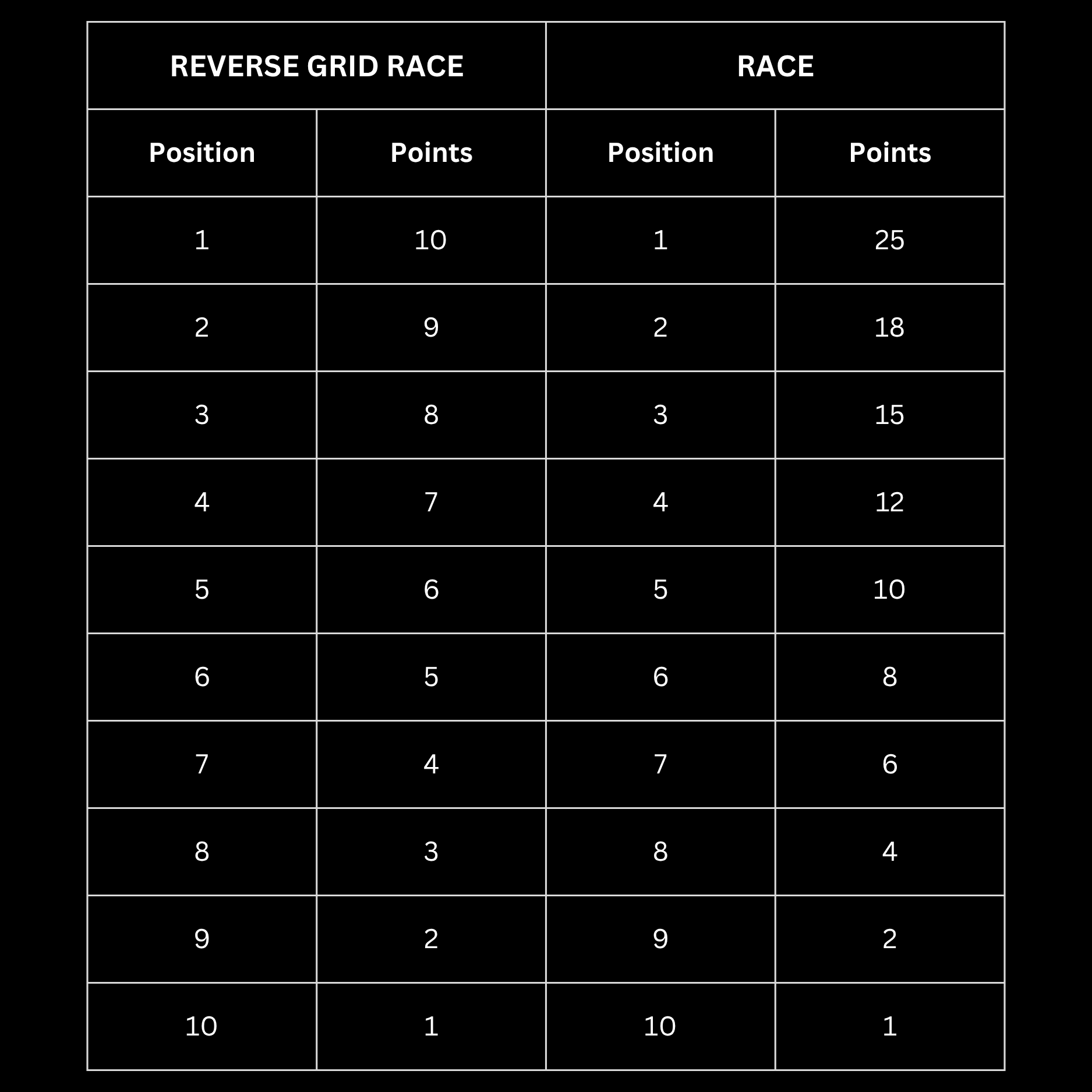
Two qualifying sessions set the grid for the first two races. Then there's a third race on a partially reversed grid at 4 of the rounds, which is where things get exciting in the best possible way. Drivers who qualified mid-pack suddenly find themselves fighting at the front. Points from all three races count towards the championship, so no race is a throwaway.
How many points can be scored in each race?
How many rounds are in a season?
Eight rounds across some of the most iconic tracks in Europe — Spa, Monza, Zandvoort, Imola, the Hungaroring, Paul Ricard, Spielberg and Hockenheim. If you're a circuit nerd, the calendar alone is worth getting excited about.
How many teams compete?
Around ten teams make up the grid. You've got big names like Prema, ART Grand Prix, Van Amersfoort Racing, MP Motorsport, Trident and Rodin Motorsport all fielding cars. These aren't small operations — several of them run teams in Formula 2 and F3 as well, so the level of professionalism is serious.
Will drivers be signing autographs and meeting fans?
Yes, drivers will be signing autographs and meeting fans. Keep an eye on my socials for timings!
Do drivers earn super license points?
We do! This is where FREC starts to feel very real. FIA super license points are what you need to accumulate before you're legally allowed to race in Formula 1. A strong FREC season can bring a driver meaningfully closer to that dream. Stakes don't get much higher at this level.
What happens after FREC?
The natural next step is FIA Formula 3, the last series before Formula 2 and then F1. Some drivers with enough super license points skip straight to F2. Either way, FREC graduates move fast. Oscar Piastri came through this ladder and is now a race-winning McLaren driver. Freddie Slater dominated the 2025 season and is already in F3 with Audi backing him. The pipeline is real.
Where can I watch it?
Free on YouTube - the official FREC channel streams every race live. Replays and highlights also go up on Motorsport.tv and their social channels. Seriously, there's no excuse not to watch. Pull it up on your laptop on a Sunday morning and you won't regret it.
Is it worth following if I'm a fan of Drive to Survive?
Honestly? Yes! The racing is tight because everyone's in the same car, the circuits are brilliant, and you're watching drivers who could be on your TV in an F1 car within a few years. Get in early, pick a driver to follow, and enjoy the race.